
Hospital ID Badge Requirements: Why Nurses and Staff Wear Them
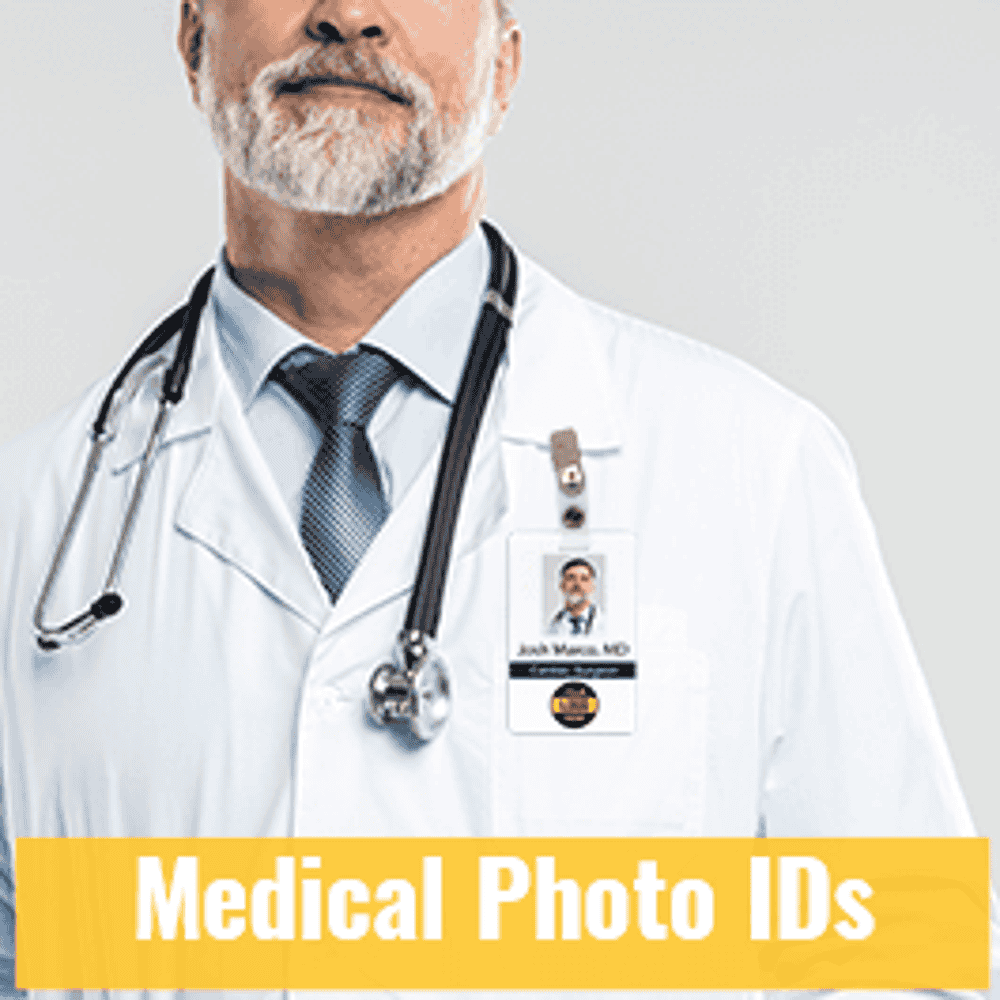
Healthcare workers wear ID badges so patients can tell who is caring for them and what that person's role is. A clear name and job title help patients and families ask the right person the right question, help staff spot someone who doesn't belong, and support a patient's right to know who is treating them. In some places it's also the law: South Carolina's Lewis Blackman Hospital Patient Safety Act and Pennsylvania's health facility rules both set out what hospital ID badges must show.
 Medical photo IDs
 Medical name tags
 Breakaway lanyards
Why do nurses and hospital staff have to wear ID badges?
A hospital floor is full of people in similar scrubs. A badge answers the questions patients and families have in the moment: Who is this? Are they a nurse, a doctor, a student or an aide? Who do I ask about my medication? A visible name and title make those answers instant.
Badges also work as a security tool. When every employee wears one, an unbadged person in a restricted area stands out. Many facilities pair badges with color-coded lanyards or badge backgrounds so roles can be read from across a room.
So yes: in some health care settings, wearing an ID badge is legally required, and many hospitals require it by policy whether or not a state law applies.
The Lewis Blackman Act: South Carolina's badge law
The Lewis Blackman Hospital Patient Safety Act became law in South Carolina in 2005. It's named for Lewis Blackman, a 15-year-old who died in 2000 after elective surgery at a South Carolina hospital. His family pushed for a law that would make it easier for patients to know who is caring for them and to get help when they're worried.
Under Section 44-7-3430, all hospital clinical staff, clinical trainees, medical students, interns and resident physicians must wear badges that clearly state:
- Their name (at minimum a first or last name with appropriate initials)
- Their department
- Their job or trainee title
Trainees, medical students, interns and residents must be identified as trainees on the badge, and the wording has to be understandable to the average person. The law doesn't require a photo. The Act also requires hospitals to tell patients in writing who their attending physician is, and to give patients a way to get prompt help with concerns about their care at any time.
Pennsylvania: name, title and a photo updated every 4 years
Pennsylvania sets badge rules in its health facility regulations. Under 28 Pa. Code § 51.6, licensed practitioners and facility-employed providers working in a health care facility must wear an ID tag showing their full name and professional designation. Abbreviations are allowed only for state licenses or certifications; otherwise the full title is printed.
For direct-care employees who work outside a facility (home care, for example) or in a physician's private practice, 28 Pa. Code § 53.3 requires a photo ID badge with a recent photo, full first and last name, title, and the name of the facility or agency. Photos must be updated at least every 4 years.
Other states have their own rules, and they change. Check with your state health department and your facility's compliance team before you finalize a badge design.
Should hospital badges show last names?
This is a real debate. Patients have a right to know who is treating them, and a full name makes it easier to follow up or report a concern. But nurses and other staff have raised privacy and safety worries about patients or visitors using a last name to find them outside work.
Rules differ. South Carolina allows either a first or last name with initials. Pennsylvania requires a full name but lets staff omit or conceal the last name when treating patients who show signs of irrationality or violence. Many facilities settle on a large first name, a clear title and credentials, with the last name smaller or on the back of the badge where the law allows it.
What to put on a medical ID badge
Start with what your state and facility require, then add what helps patients and security:
- Name in type large enough to read from a few feet away
- Job title or credentials in plain words patients understand
- Department and, for students and residents, a clear trainee label
- A current photo, refreshed on a set schedule
- Facility name and logo
- Color coding by role, if your facility uses it
- Barcode, QR code or access chip for doors and timekeeping
- Issue or expiration date
You can design your own photo ID badge or start from our medical photo ID templates. For staff who prefer a name tag over a card, see our medical name tags. Need help with the photo itself? Here's how to take a good ID badge photo.
Visitor badges and hospital security
Staff badges only work if everyone else on the floor is identified too. Many hospitals check visitors in at the front desk and issue a visitor badge that shows the date and the unit they're visiting. Color-coded or dated passes make an expired badge easy to spot, and reusable visitor passes keep the cost down for smaller clinics.
How staff wear their badges matters too. A breakaway lanyard releases when it's pulled, and a retractable badge reel lets staff scan a card reader without unclipping their ID.
Hospital ID badge FAQ
Is wearing a photo ID legally required in health care?
In some settings, yes. Pennsylvania requires photo ID badges for direct-care employees working outside a facility or in a physician's private practice. South Carolina requires hospital clinical staff to wear name badges with their department and title. Many hospitals also require badges by policy where no state law applies.
What does the Lewis Blackman Act require on a badge?
A name (first or last with initials), department and job or trainee title, written in terms the average person can understand. Trainees must be clearly labeled as trainees.
How often should a hospital ID photo be updated?
Pennsylvania requires an update at least every 4 years for badges covered by § 53.3. Many facilities refresh photos more often so the badge still looks like the person wearing it.
What is the main reason health care workers wear ID badges?
So patients, families and coworkers can identify who is providing care and what their role is. Badges also help security spot people who shouldn't be in restricted areas.